Writing
DeFi Development Services for Web3 Apps & Dashboards
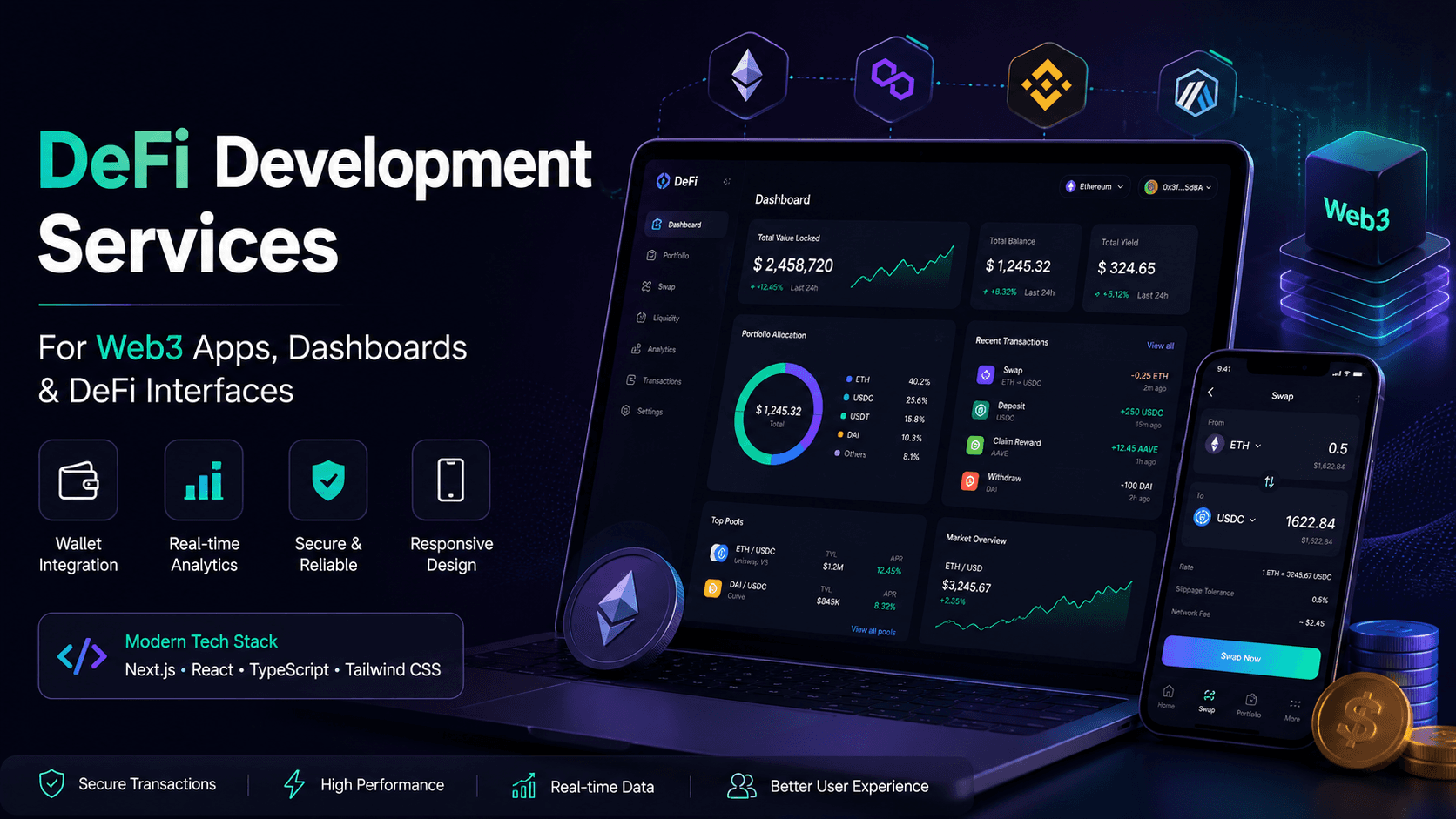
DeFi development services for Web3 apps, dashboards, wallets, and interfaces with secure, responsive, and user-friendly blockchain experiences.
DeFi products can look simple on screen while hiding plenty of engineering work underneath. Wallet states, blockchain data, transaction feedback, responsive layouts, and performance all need to work as intended.
Khalil Ahmed focuses on the frontend and Web3 side of DeFi development, building wallet-connected applications, dashboards, analytics products, and DeFi interfaces using Next.js, React, TypeScript, and Tailwind CSS.
What Are DeFi Development Services?
DeFi development services can cover everything from smart contracts to the application users actually interact with. For a frontend specialist, this means turning on-chain functionality into a clear and usable product.
The distinction matters. Protocol engineering handles financial logic, while DeFi frontend development focuses on wallets, data, transactions, dashboards, and user interaction.
DeFi Frontend Development
DeFi frontend development connects blockchain functionality with the user interface. It can include wallet connections, token balances, transaction flows, analytics, dashboards, and responsive interfaces.
DeFi Application Development
DeFi application development focuses on building usable applications around decentralized financial products, including portfolio tools, yield interfaces, trading screens, and analytics platforms.
What Is FinTech and DeFi?
FinTech usually improves traditional financial services through software. DeFi uses blockchain networks and smart contracts to create programmable financial products.
This difference between FinTech and DeFi also changes the interface. Users may need to approve transactions, switch networks, review gas estimates, or understand wallet balances before taking action.
FinTech vs DeFi
FinTech applications generally work with traditional financial institutions and centralized systems.
DeFi applications interact with blockchain networks, wallets, smart contracts, and decentralized protocols.
DeFi Development Services I Provide
Khalil's focus is practical: Web3 dashboards, DeFi interfaces, analytics products, and production-ready frontend applications.
His portfolio includes a DeFi yield aggregator, wallet analyzers, whale tracking, and other Web3 dashboards.
DeFi App Development
A DeFi app needs more than attractive cards and charts. It needs reliable wallet connections, transaction states, responsive layouts, data fetching, and clear feedback when something goes wrong.
DeFi Wallet Development
The focus here is wallet integration rather than building a custodial wallet from scratch.
Wagmi, RainbowKit, WalletConnect, and MetaMask can support:
-
Wallet connection
-
Network switching
-
Session persistence
-
Account changes
-
Mobile wallet flows
-
Transaction signing
DeFi App Development Services
Useful DeFi applications often combine portfolio views, yield information, transaction history, charts, and protocol data.
The goal is to make complex blockchain information understandable without hiding important details.
DeFi Application Development
A specialist frontend developer can work alongside protocol, backend, or product teams when the smart-contract layer already exists.
This keeps responsibilities clear while giving the product a dedicated Web3 interface layer.
DeFi Exchange Development
DeFi exchange frontend development can include:
-
Swap screens
-
Token selection
-
Liquidity information
-
Slippage warnings
-
Wallet states
-
Transaction confirmations
-
Gas information
The interface should explain what the user is about to sign rather than simply displaying a button.
DeFi Token Development
Token-related products often need dashboards showing balances, holders, transactions, prices, volume, and other on-chain activity.
Khalil's portfolio includes token and wallet analytics work that demonstrates this frontend use case.
DeFi Token Development vs Token Contract Development
Token-contract creation is different from building the interface around a token.
This distinction should remain clear when choosing a developer, especially when contract deployment and auditing require separate specialists.
DeFi Developers
Look beyond a résumé. A useful DeFi developer should have shipped relevant work, understand wallet and blockchain data flows, and be able to show working projects or code.
Khalil's public portfolio and GitHub projects provide examples of Web3 dashboards, wallet analyzers, and on-chain analytics implementations.
DeFi Holding and Asset Management Interfaces
"DeFi holding" can mean simply keeping digital assets in a wallet, while staking and liquidity provision involve additional protocol activity.
A good asset-management interface should make those differences obvious.
Portfolio Management
Portfolio allocation, balances, transaction history, yield information, and wallet activity can turn scattered blockchain data into something useful.
Staking and Liquidity Interfaces
Interfaces for staking and liquidity provision should clearly explain:
-
Deposits
-
Withdrawals
-
Rewards
-
APY or yield information
-
Transaction status
-
Network fees
-
Risks and requirements
DeFi Architecture, On-Chain Data and Technology Stack
A DeFi frontend may use Next.js and React for the application, TypeScript for safer development, and Tailwind CSS for the interface.
Wallet tooling and data providers then connect the UI to blockchain activity.
Blockchain Data Sources
The data source depends on what the application needs.
-
The Graph: Indexed protocol and event data
-
Moralis: Wallet and blockchain analytics
-
RPC providers: Direct blockchain reads and real-time contract data
-
React Query: Caching, refetching, and server-state management
Frontend Technology Stack
A typical DeFi frontend can include:
-
Next.js
-
React
-
TypeScript
-
Tailwind CSS
-
Wagmi
-
Viem
-
React Query
-
WalletConnect
-
RainbowKit
-
Blockchain indexing services
DeFi UX, Performance and Accessibility
DeFi interfaces need useful states for pending transactions, failed calls, gas estimates, slippage warnings, loading data, and disconnected wallets.
Missing one of these states can leave users wondering whether their transaction actually worked.
Transaction Feedback
A good transaction flow should clearly communicate:
-
Wallet connection
-
Approval
-
Signature request
-
Transaction submission
-
Pending status
-
Confirmation
-
Success or failure
Responsive DeFi Interfaces
Mobile support matters just as much as desktop support.
Khalil focuses on responsive interfaces, wallet deep links, skeleton loading, and dashboards that remain useful before a wallet is connected.
DeFi Accessibility
Important actions, transaction states, errors, and financial information should remain clear and usable across different screen sizes and interaction methods.
DeFi Security From the Frontend Perspective
Frontend security does not replace a smart-contract audit. However, it can reduce avoidable mistakes around wallet interaction.
Frontend Security Practices
A careful DeFi interface should:
-
Detect the selected network
-
Avoid exposing sensitive credentials
-
Explain transaction details
-
Handle rejected signatures
-
Validate wallet states
-
Show useful errors
-
Prevent incorrect network interactions
How I Build DeFi Interfaces
A focused development process keeps the product moving without hiding important technical decisions.
Requirements and Data Mapping
First, identify the users, chains, contracts, APIs, dashboard views, and wallet actions.
This prevents expensive redesigns after development starts.
UI Architecture and Wallet Flows
Next comes the component structure and transaction experience.
Connection, approval, signing, pending, success, and failure states should all be planned before implementation.
Data Integration and Performance
The right data source depends on the use case.
Indexed protocol data, wallet activity, and real-time contract reads should not automatically use the same approach.
Testing and Production Deployment
Testing should cover:
-
Wallet states
-
Mobile layouts
-
Failed transactions
-
Data errors
-
Network switching
-
Production behavior
Deployment can include Vercel, domain configuration, DNS, SSL, and environment configuration.
How Much Does DeFi Development Cost?
There isn't one meaningful price for every DeFi product.
Scope, design readiness, wallet integrations, data sources, API work, and frontend complexity can all change the estimate.
Khalil currently lists Web3 Dashboard development from $800 and Full Product Frontend work from $1,500, with different timelines and deliverables for each package.
How Long Does DeFi Development Take?
A focused Web3 dashboard is typically listed at 1–2 weeks, while a full product frontend is listed at 2–4 weeks.
These estimates assume a defined scope rather than a constantly changing product.
Factors That Affect Development Time
Complex integrations can take longer because of:
-
Smart-contract dependencies
-
API availability
-
Design changes
-
Wallet integrations
-
Data requirements
-
Review cycles
-
Multi-chain support
How to Choose DeFi Developers
Do not make a decision based only on marketing copy. Check real work and technical experience.
What to Check Before Hiring
Look for:
-
Deployed products
-
Relevant GitHub projects
-
Wallet integration experience
-
Blockchain data knowledge
-
Communication skills
-
Ownership terms
-
Post-launch support
A developer who can explain why they designed an indexer, RPC call, caching strategy, or wallet flow can provide more confidence than someone who only lists technical buzzwords.
Why Choose Khalil Ahmed for DeFi Frontend Development?
Khalil Ahmed has 5+ years of frontend experience and specializes in Next.js, TypeScript, React, Tailwind CSS, Web3 dashboards, DeFi interfaces, and analytics products.
He also has $10K+ in projects completed on Upwork and a Job Success Score of 100%.
Relevant DeFi and Web3 Projects
His published work includes:
-
DeFi yield aggregator
-
Wallet transaction analyzer
-
Whale tracker
-
Web3 dashboard starter
-
On-chain analytics products
-
Wallet-connected applications
These projects demonstrate practical experience with Web3 interfaces and blockchain-based frontend applications.
Frequently Asked Questions About DeFi Development
What Are DeFi Development Services?
They include building blockchain-based financial applications and the interfaces connecting users to them.
The scope can include wallets, dashboards, analytics, frontend applications, smart contracts, or backend integrations.
What Is FinTech and DeFi?
FinTech uses software to improve financial services, while DeFi uses blockchain networks and programmable protocols to provide financial functions without relying on traditional intermediaries.
What Is Decentralized Exchange Development?
It includes building the trading experience around a decentralized exchange, such as token selection, swaps, liquidity information, wallet connection, transaction status, and slippage controls.
What Is DeFi App Development?
DeFi app development is the creation of applications that let users interact with DeFi products through dashboards, trading interfaces, portfolio tools, yield products, or other blockchain-based experiences.
What Is DeFi Application Development?
It combines interface architecture, blockchain data, wallet connectivity, APIs, and application logic into a usable Web3 product.
What Is DeFi Token Development?
It can involve creating token-related applications, dashboards, analytics, and interfaces.
Smart-contract creation is a separate engineering responsibility when required.
What Is DeFi Holding?
DeFi holding generally means keeping digital assets while using a DeFi-compatible wallet or application.
It differs from activities such as staking or providing liquidity.
How Do I Choose DeFi Developers?
Review shipped projects, technical skills, GitHub work, wallet experience, blockchain data knowledge, communication, and ownership terms before hiring.
Conclusion
Good DeFi software should make blockchain complexity feel manageable without hiding what matters.
Wallet states, transaction feedback, data accuracy, performance, and responsive design all shape that experience.
For DeFi dashboards, interfaces, analytics products, and wallet-connected applications, Khalil brings a focused frontend and Web3 skill set backed by real projects and public technical work.