










Overview
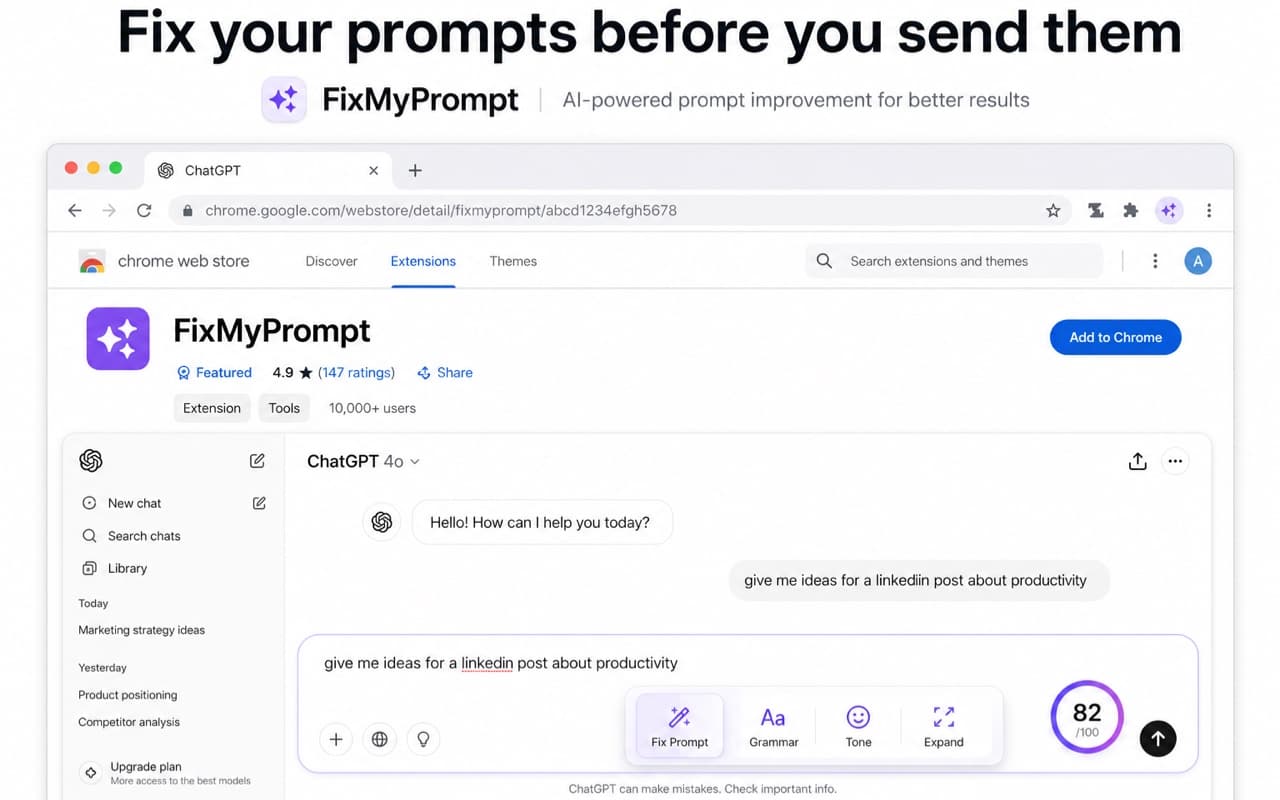
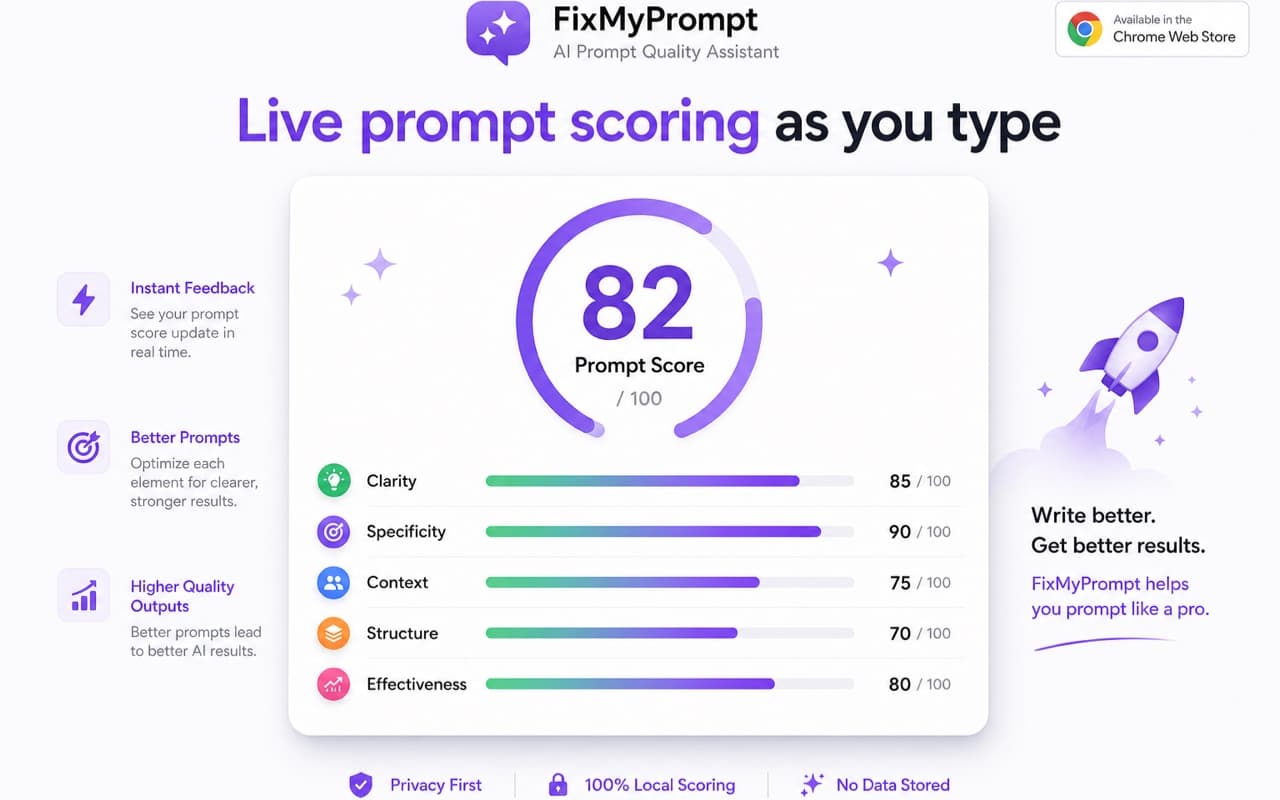
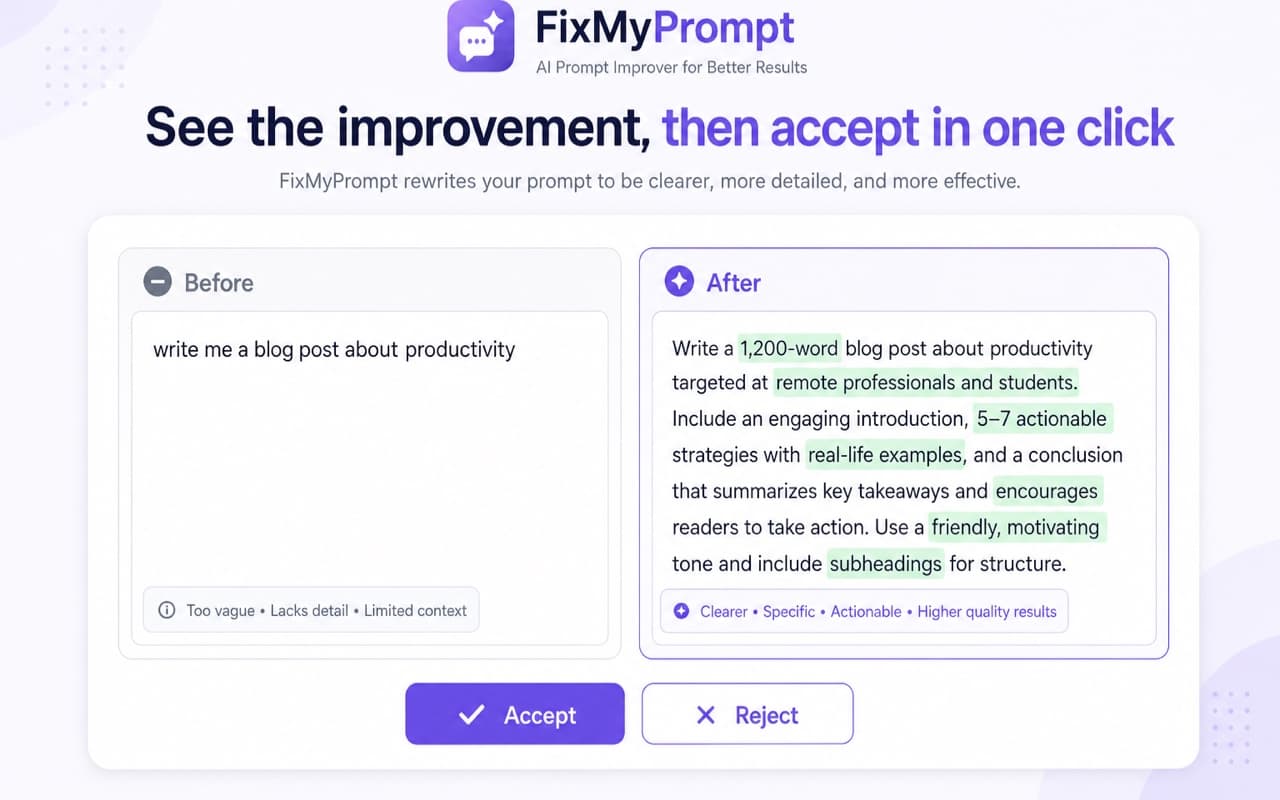
FixMyPrompt is a Manifest V3 Chrome extension that sits on AI chat sites and improves prompts before they are sent. It scores drafts locally, offers one-click rewrites, and shows a before/after compare so users can accept or reject the change.
Problem
People paste weak, vague prompts into ChatGPT and similar tools, then iterate blindly. There is no in-page score or rewrite before the request hits the model.
Solution
Built a Plasmo + React + TypeScript extension that detects prompt inputs across major AI platforms, scores them on five dimensions, and rewrites with one click — plus history, templates, and a compare view.
My role
Sole product engineer — extension architecture, UI, scoring, platform detection, and Chrome Web Store assets.
Key features
- Works on ChatGPT, Claude, Gemini, Perplexity, Grok, DeepSeek, and more
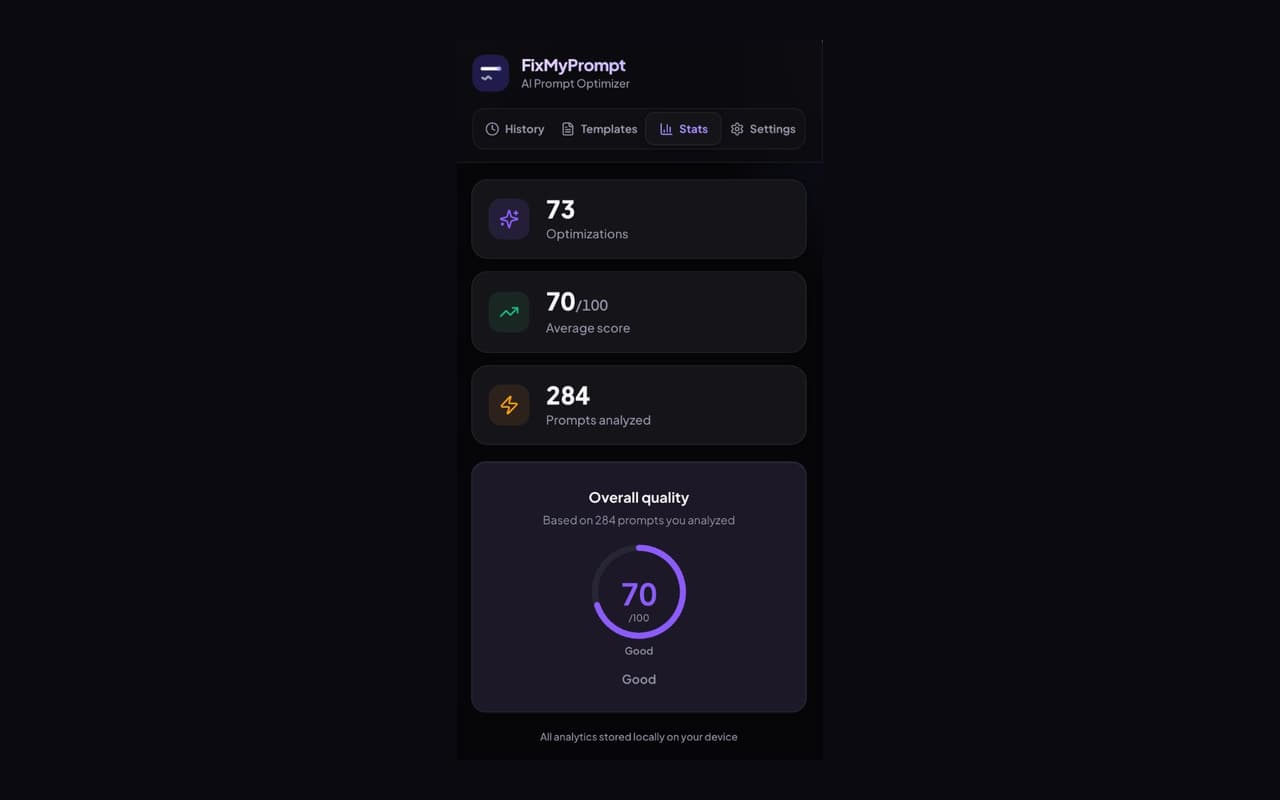
- Live 0–100 prompt score with category breakdowns
- One-click improve, grammar, concise, and expand actions
- Before/after compare with accept or reject
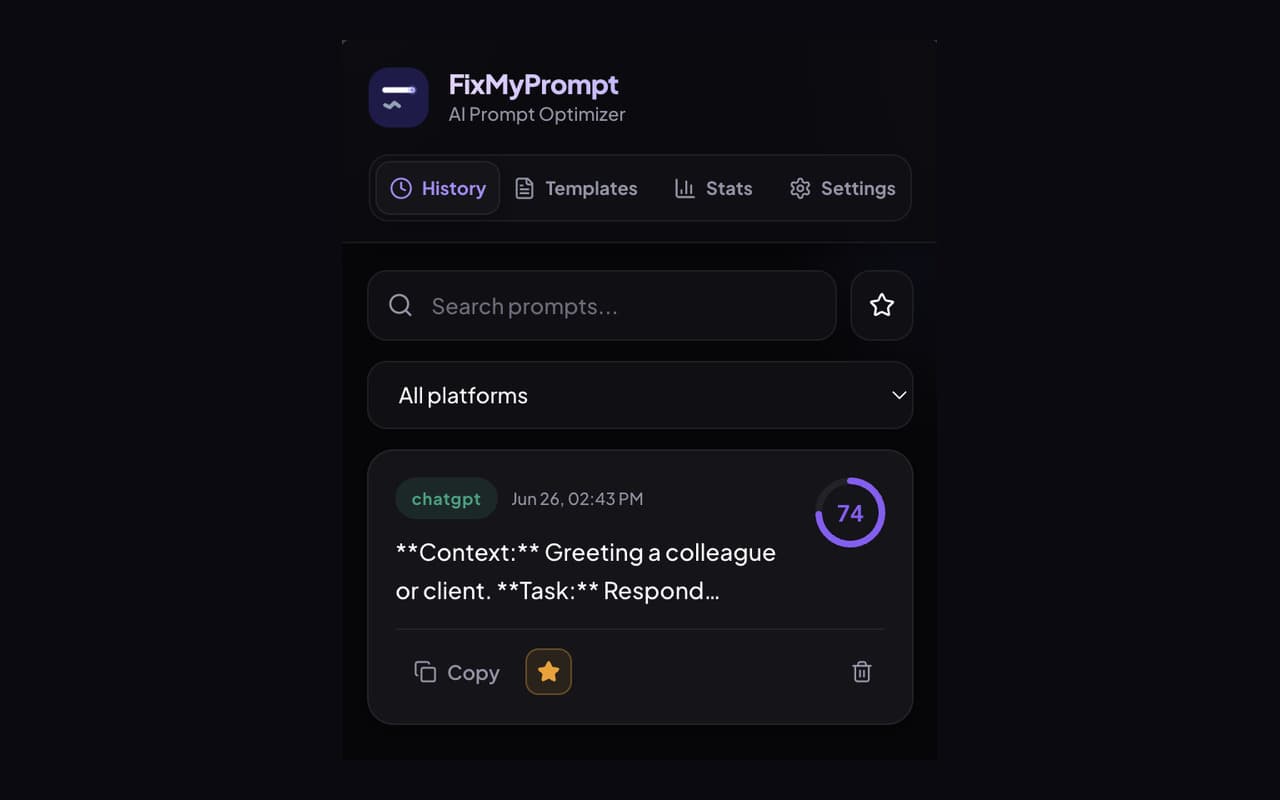
- Prompt history, templates, and keyboard shortcuts
Results & impact
Turns prompt writing into a scored, editable step on the page you already use — without leaving ChatGPT or Claude.
Technology stack
- Chrome Extension
- Plasmo
- React
- TypeScript
- Tailwind CSS
Screenshots
Related projects
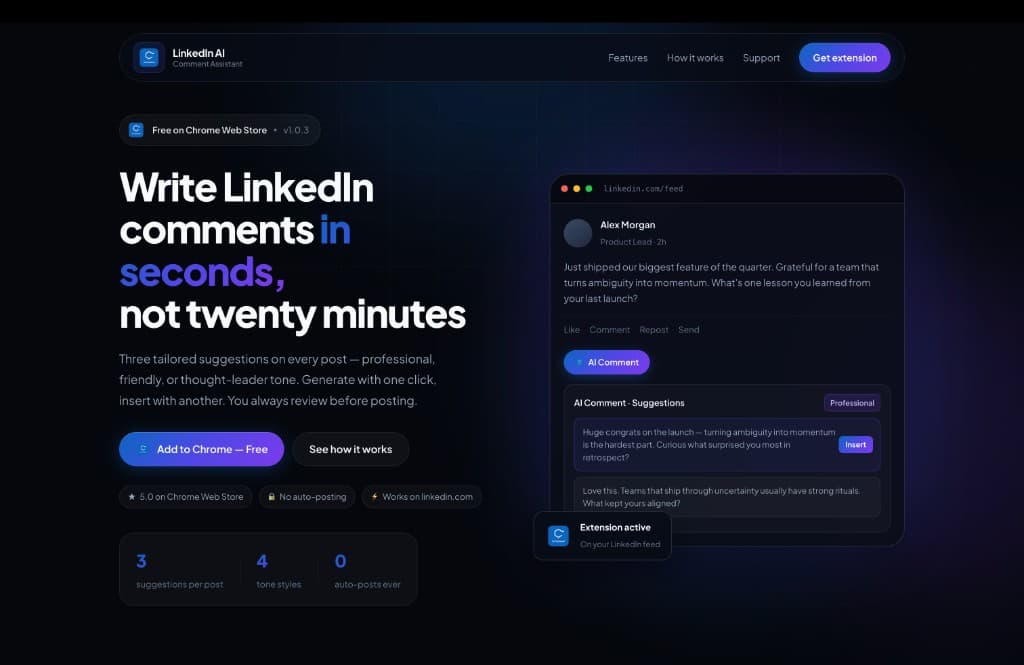
LinkedIn AI Comment Assistant
Chrome extension and marketing site for LinkedIn engagement — inline AI Comment on every post, three suggestions, four tones, post writer, and zero auto-posts. Free on the Chrome Web Store.
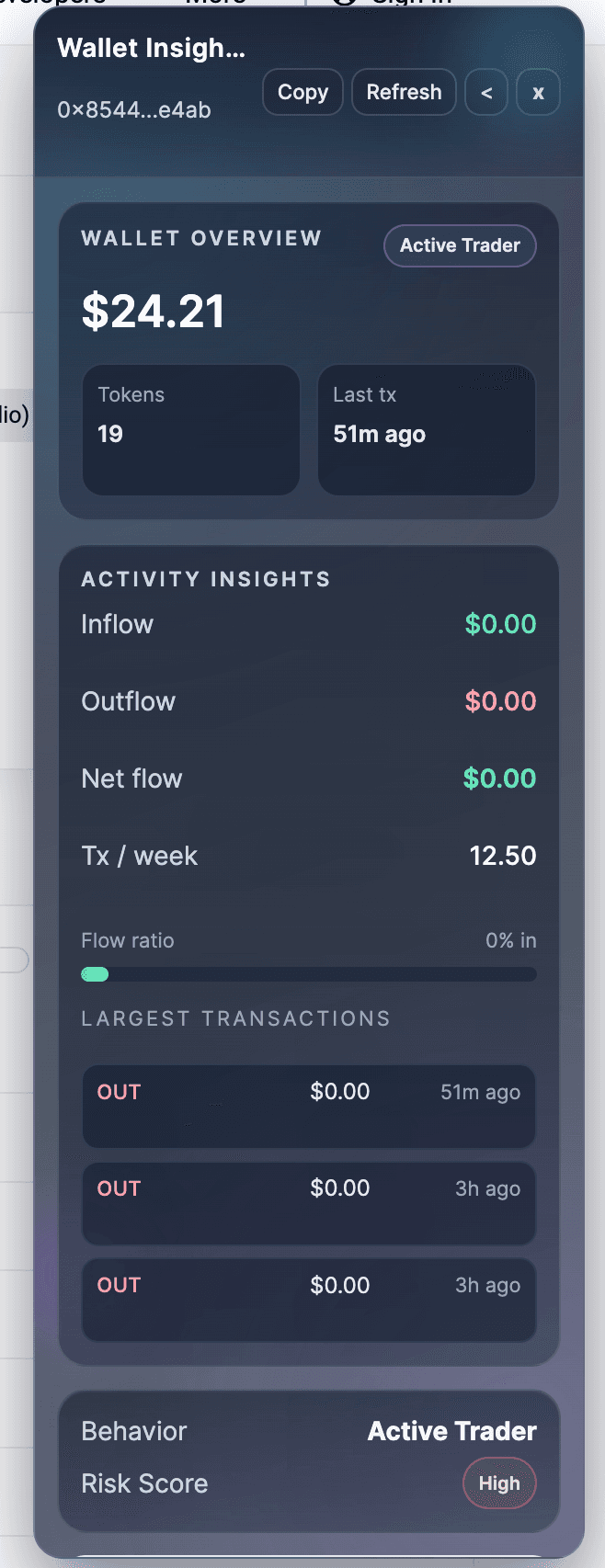
Wallet Insights for Etherscan
A Chrome extension that injects a wallet insights sidebar on Etherscan and PolygonScan — net worth, inflow/outflow, behavior tags, and a risk score without leaving the explorer.
Related articles
How to Work with APIs in Frontend Dashboards
REST vs GraphQL, error handling, caching, rate limits, data transformation, and TypeScript types. Practical API patterns for React and Next.js dashboard development.
APITypeScriptReact QueryTypeScript Tips for Frontend Developers Building Dashboards
Type API responses with zod, use utility types, avoid any, handle optional data, and build type-safe components. Web3-specific TypeScript patterns with viem types.
TypeScriptDashboardsZodHow to Handle Loading, Empty, and Error States in Modern Dashboards
Skeleton loaders, empty states, error recovery, wallet disconnected states, and API failure handling. Practical React patterns for Web3 and analytics dashboards.
UXReactDashboards
Need a Web3 dashboard or frontend like this?
I build production-ready Web3 dashboards, DeFi interfaces, and analytics frontends with Next.js, TypeScript, and Tailwind CSS.